




Aliveness in Martial Arts Training
Why Resistance, Timing, and Movement Matter
In martial arts, not all training is created equal. Many systems spend years drilling techniques that look clean, precise, and impressive—but fall apart the moment resistance is introduced.
At NAK Martial Arts, our training philosophy is rooted in aliveness, a concept popularized by Matt Thornton of Straight Blast Gym. Aliveness is not about being reckless or going hard all the time—it’s about training in a way that actually works.
Aliveness requires three essential components:
Resistance. Timing. Movement.
If any one of these is missing, the training becomes incomplete—and the skill will not reliably transfer to real performance.
What Is Aliveness?
Aliveness means training against a non-compliant, adaptive partner who is actively trying to succeed as well.
This creates an environment where:
-
Techniques must function under pressure
-
Athletes must make decisions in real time
-
Skills evolve naturally instead of being memorized
Aliveness ensures that what you practice in the gym survives contact with reality.
1. Resistance

Definition:
Resistance means your training partner is actively trying to stop you, escape, counter, or impose their own strategy.
Key Points:
-
Resistance is real, not cooperative
-
It is scaled appropriately for age, experience, and safety
-
Partners are not “feeding” techniques—they are responding honestly
Why Resistance Matters:
Without resistance, training creates false confidence. A technique that only works when someone allows it is not a technique—it’s choreography.
Resistance:
-
Forces correct mechanics and positioning
-
Exposes inefficiencies immediately
-
Builds composure under pressure
At NAK, resistance is introduced progressively so athletes learn how to problem-solve instead of panic.
2. Timing
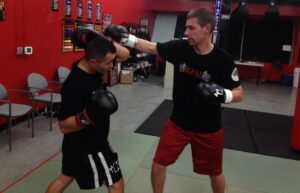
Definition:
Timing is the ability to apply a technique at the correct moment against an opponent who is resisting and moving.
Key Points:
-
Timing cannot be learned through static drills alone
-
It develops naturally when resistance and movement are present
-
It includes recognizing openings, transitions, and counters
Why Timing Matters:
Perfect technique applied at the wrong time still fails. Real fights, sparring, and competition are dynamic and unpredictable.
Alive training teaches athletes:
-
When to act
-
When to wait
-
When to transition
Timing is not something a coach can simply explain—it is something an athlete earns through experience.
3. Movement

Definition:
Movement refers to continuous, unscripted motion from both training partners. Distance, angles, and positions are always changing.
Key Points:
-
Real opponents do not stand still
-
Movement includes footwork, balance, angles, and transitions
-
Training must allow freedom, not fixed poses
Why Movement Matters:
Static training creates habits that collapse under pressure. Movement builds:
-
Balance and base
-
Spatial awareness
-
Adaptability in chaotic situations
At NAK, movement is baked into training from day one—because stillness does not exist in real fighting.
How the Three Work Together
True aliveness only exists when all three elements are present at the same time:
-
Resistance without timing becomes brute force
-
Timing without movement becomes unrealistic
-
Movement without resistance becomes cooperative
Resistance + Timing + Movement = Aliveness
Remove one, and the training becomes theoretical instead of functional.
Why NAK Martial Arts Trains This Way
Our goal is not to produce athletes who are good at drills.
Our goal is to develop athletes who can perform under pressure.
That’s why NAK training emphasizes:
-
Progressive resistance
-
Live positional work
-
Controlled sparring
-
Game-based learning environments
This approach builds confidence that is earned, not imagined.
The Bottom Line
Aliveness is not a style—it’s a standard.
If training does not include resistance, timing, and movement, it is incomplete. At NAK Martial Arts, we hold ourselves and our athletes to a higher standard—because skills that work in theory are not enough.
We train for what’s real.
If this sounds like something you would like to try:
Schedule a Free consultation and free class at: https://spblive.net/FirstLesson